Treadmill belt size is the one number on a spec sheet that you can check with a tape measure and a bit of floor space. And it’s also the number listings muddle most. Two machines can both say “55 inches” and give you very different amounts of room to run. So before you pay for motor power or screen size, it’s worth knowing exactly which treadmill belt size you need.
Picture a tall runner who buys a “60-inch” treadmill and finds, on delivery day, that the part that actually moves under their feet is closer to 55. Nobody lied, exactly. The listing used a number that included the end caps and the motor hood, and the buyer assumed it meant running surface. It’s an easy mistake, and a pricey one when the return freight is your problem.
This guide is the narrow, practical companion to our full treadmill buying guide. That article covers motors, incline, cushioning and warranty together. Here we stay on one question and answer it properly: which treadmill belt size suits you, your pace and your room?
The short answer
Your treadmill belt size should match your longest stride at your fastest regular speed, plus a safety margin. And then it should be checked against the room you actually have. Most walkers are comfortable on a belt around 48 to 55 inches long. Joggers usually want roughly 50 to 58 inches. Runners, and anyone over about six feet tall, tend to be happier at 58 to 60 inches or more.
- Who it fits: first-time buyers, tall users, shared households and anyone choosing between a compact machine and a full-size one.
- Width: 16 to 18 inches is fine for walking. Around 20 inches is the common comfort zone for jogging and running, and 22 inches is a luxury that mostly helps wide-stance or nervous users.
- The biggest tradeoff: every extra few inches of belt adds length to the footprint, and in a small room that can cost you more than it gives back.
- The most common trap: confusing the belt (the moving surface) with the deck (the board underneath) or the machine’s overall length.
Measure your own stride before you shop. It takes ten minutes and a roll of tape, and the steps are in the measuring section below.
How we researched this. This is research-based guidance. We built it from manufacturer specification patterns, federal guidance and ownership problems commonly reported by buyers. We haven’t hands-tested any machine for this article. And every size range here is a typical figure that varies by maker and year. Always confirm the numbers against the manufacturer’s own spec sheet. Some links on this site may be affiliate links; if you buy through them we may earn a commission at no extra cost to you. But recommendations are based on the criteria in the article, not payout. Last reviewed: October 2026.
Treadmill Belt Size vs. Deck Size vs. Overall Length
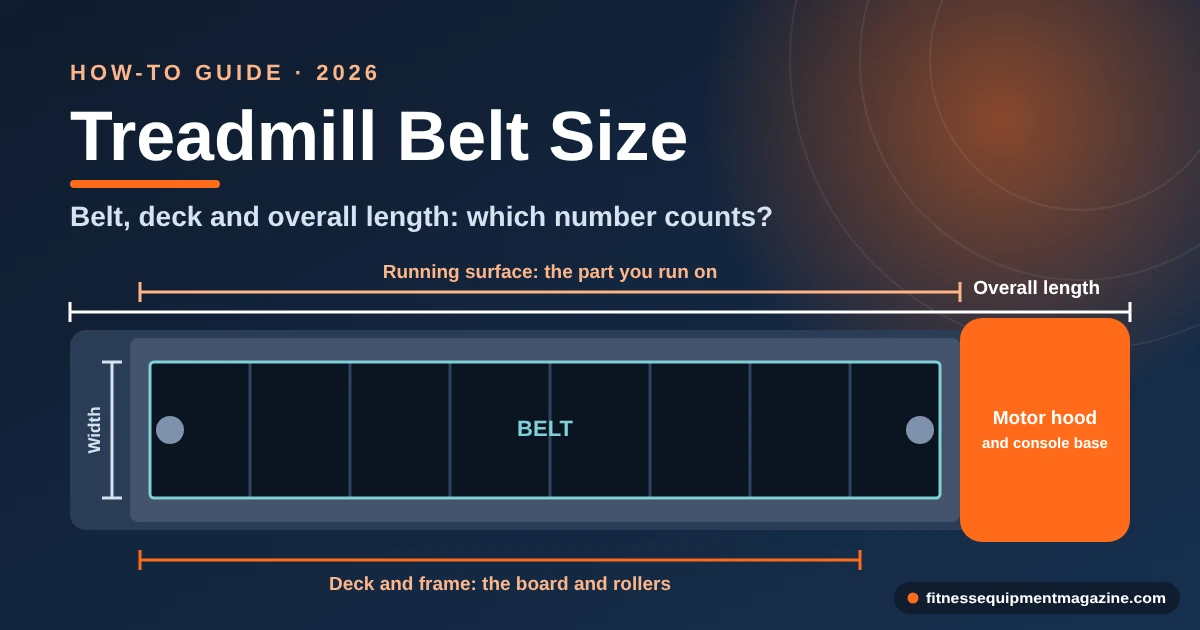
Three different lengths hide behind the word “size,” and each one answers a different question. The belt tells you how much room you have to run. The deck tells you what’s holding that belt up. The overall length tells you whether the machine fits in the room. Mixing them up is the root of most bad purchases.
The belt, or running surface
The belt is the loop of material that moves under your feet. The part you can step on is the top stretch of that loop, between the front roller and the rear roller. That visible, usable stretch is what shoppers mean by “running surface,” and it’s the number that matters most when you’re asking how much treadmill belt size you need.
The loop itself is much longer than the running surface, because it wraps around both rollers and returns underneath. That’s why a belt sold for replacement is often described by a loop length that looks nothing like the number on the original listing. We come back to that in the wear section.
The deck, or what’s under the belt
The deck is the board the belt slides over. It’s usually a thick, coated composite or wood panel, and it carries most of the cushioning story. Because the deck sits between the rollers, it’s often a little shorter than the full frame but nearly as long as the running surface.
Here’s where the confusion starts. Some sellers use “deck size” as a casual synonym for running surface. Others use it for the physical board, which can be a few inches longer or shorter than what you can actually stand on. Neither habit is dishonest by itself. The problem is that you can’t tell which one you’re reading without more information.
Overall length and the footprint
Overall length is the full machine from the very back of the frame to the front of the console base or motor hood. It’s always longer than the running surface, typically by about 15 to 25 inches on a full-size machine. That is because the motor, rollers and end caps all sit outside the moving part.
Footprint is overall length times overall width, and it’s what you hold against your floor plan. Whatever treadmill belt size you choose, the footprint decides whether the machine fits. A machine with a 60-inch belt commonly runs somewhere around 75 to 85 inches long once the hood and frame are included. That’s a typical range, not a rule. And designs that sit the motor lower or tuck the console in can come in shorter.
Treadmill belt size has a width too, and it matters just as much
Width is simpler. It’s measured across the belt, edge to edge, and listings state it in inches, commonly 16, 18, 20 or 22. Overall width is bigger, because it includes the side rails and the frame. Plan on adding several inches on each side when you’re checking a doorway or a narrow hallway.
How Manufacturers State Treadmill Belt Size
Almost every US listing writes treadmill belt size in a compact format: width by length, in inches. A “20 x 55” machine has a belt about 20 inches wide and 55 inches long. If the numbers come in a different order, such as “55 x 20,” the larger number is almost certainly the length. The pattern is common, but it isn’t policed by anyone, so you have to read the surrounding text.
Phrases you’ll meet, and what they usually mean
- “Running surface” or “belt size”: the usable moving area. This is the number you want.
- “Deck size” or “deck dimensions”: ambiguous. It might be the running surface, or the physical board, or even the whole frame.
- “Product dimensions” or “assembled size”: overall length, width and height of the machine in use. That’s the footprint.
- “Folded dimensions”: the storage footprint after the deck is lifted. It says nothing about running room.
- “Belt length” in a parts listing: often the full loop circumference, which can look more than twice as long as the running surface.
When the listing gives only one length, ask yourself which of those five it might be. A number like 62 inches next to a machine marketed for walking is probably an overall or product length. A number like 48 inches on a compact folder is likely the running surface, since that’s the figure sellers want to state honestly in that category.
Metric listings and unit slips
Some imported or multi-region listings give treadmill belt size in centimeters, and conversions can slip. A 140 cm belt is about 55 inches, and a 50 cm belt is just under 20. When a listing mixes units, check both lines against each other. If a table shows 127 cm and the headline says 55 inches, one of them is rounding in a way that’s costing you a few inches.
A fast sanity check
Divide the claimed overall length by the claimed running surface. For a full-size treadmill, the ratio typically lands near 1.25 to 1.4. If the ratio is close to 1.0, the listing is probably showing the same number twice. If it’s above 1.6, the machine may have a very short belt for its size.
Does a mismatch always mean someone is being sneaky? Not usually. Product pages get assembled from supplier sheets, translated, and updated by different people. Still, the buyer is the one who pays for the guess. So a polite question to the seller before you order is cheap insurance. We cover exactly what to ask in the buying workflow near the end.
For the wider context on how treadmill belt size sits alongside motor and warranty claims, our guide to choosing the best treadmills for home use walks through the whole decision. If you’re only trying to decide how much belt a walking-focused buyer needs, hold that thought for the sizing bands. That is because the answer is smaller than most people expect.
How to Measure Your Stride at Home to Pick a Treadmill Belt Size
Height charts are a decent starting point, but your own stride is better data. Two people who are both 5 foot 10 can move very differently: one shuffles with quick short steps, the other bounds. The belt has to accommodate the way you actually move. So the most reliable treadmill belt size advice starts with a tape measure and a hallway or driveway.
Two words people mix up: step and stride
A step is the distance from one foot’s landing to the other foot’s landing. A stride is the distance from one foot’s landing to the next landing of the same foot, which is two steps. Treadmill marketing uses “stride” loosely, and sometimes means step. We’ll keep the two apart here, because the treadmill belt size guidance below is built on stride. And a mix-up would leave you with a belt that’s far too short.
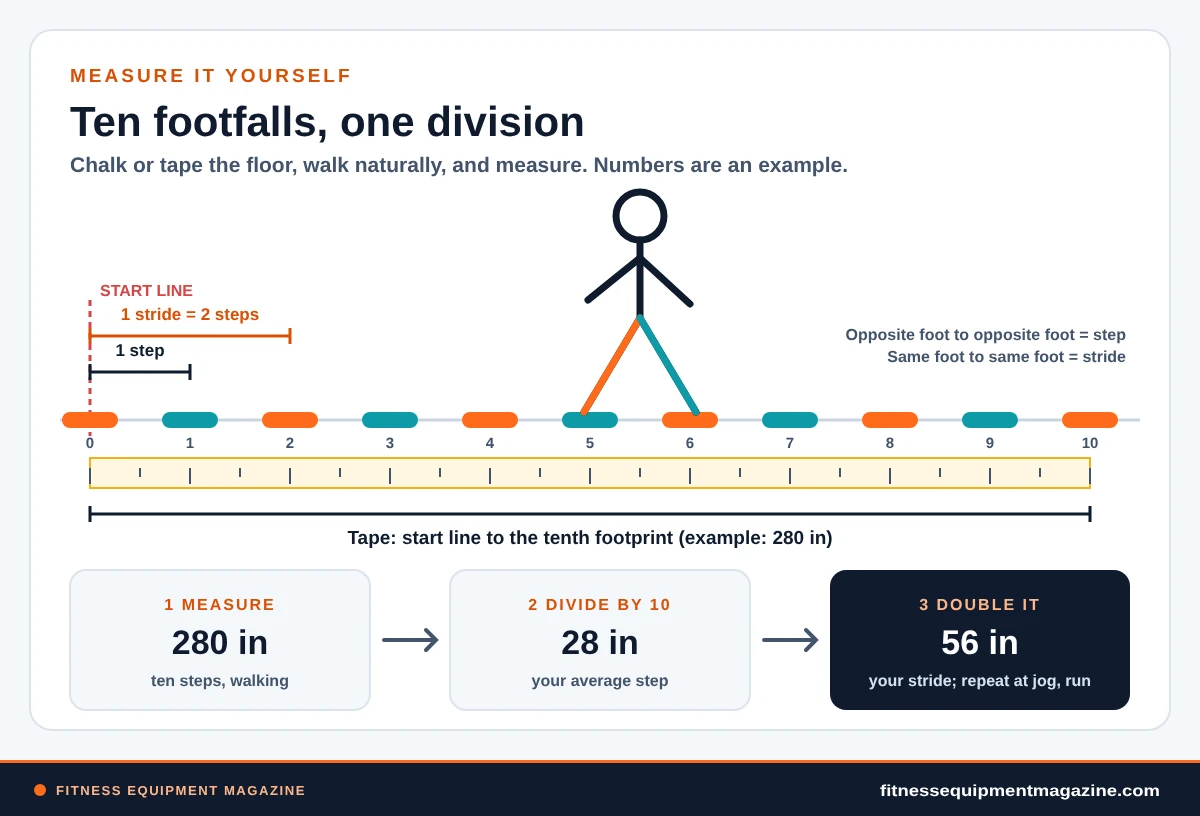
The ten-minute measuring routine
- Pick a flat, dry stretch about 40 feet longA hallway, an empty driveway or a quiet sidewalk works. Wear the shoes you’ll use on the treadmill, because thick running shoes add a little length to your stride.
- Mark a start line with tape or chalkStand with the toe of your right foot on the line. Walk at your natural pace for ten steps, without trying to stretch or shorten them.
- Mark where the tenth step landsUse the back of the heel, or the toe, but pick one and stay consistent. A helper with chalk makes this easier. If you’re alone, a wet sole on dry concrete leaves a print you can measure afterward.
- Measure and divideMeasure the distance between the two marks in inches. Divide by ten for your average step. Double that for your stride.
- Repeat at a jog, then at a runUse the pace you realistically plan to use on the machine, not your best day. Jogging and running steps need more space to build up, so give yourself at least 60 feet and count ten footfalls once you’re moving steadily.
- Repeat once more and averageStrides vary from trial to trial. Take the larger of your two averages for the final number, since you want a belt that handles your long strides, not your shortest.
No space? Use your phone
Film yourself from the side while walking or jogging past a tape measure laid on the floor. Pause the video at each heel strike and read the marker. The result is a little less precise than chalk marks, but it works in a backyard or a gym corridor.
A worked example (hypothetical shopper)
Imagine a shopper who is 5 foot 10. After the routine above, her averages come out like this: a walking step of about 28 inches, a jogging step of about 34 inches and a running step of about 40 inches. That makes her strides roughly 56, 68 and 80 inches. The numbers are made up to show the arithmetic, but they’re typical enough to be plausible for an adult of that height.
Her long running stride, around 6.7 feet, tells her to look at a treadmill belt size in the high 50s to 60 inches. If she only ever planned to walk, the 56-inch walking stride would still be comfortable on something near 50. Same person, two different answers, which is exactly why it helps to know what you plan to do on the machine.
The height shortcut, and when to distrust it
If you can’t measure, height is a rough proxy. Walking step length is commonly estimated at around 40 to 42 percent of height. So a 5 foot 10 adult lands near 28 inches. That’s consistent with the example above. Running steps scale less predictably: speed, cadence, fitness and technique all push the number around. So treat height as a sanity check, not a substitute for the floor measurement.
Three other measurements that shape treadmill belt size
- Foot length and width. Measure your shoe, not your foot. A men’s size 12 running shoe is commonly around 12 inches long and 4.5 inches across. That space is part of your belt requirement.
- Elbow clearance. Stand with your arms bent as if running and measure from outside elbow to outside elbow. It’s often wider than people expect, and it tells you whether handrails or a tight room will crowd your arms, even if your feet have plenty of belt width.
- Your doorway-to-doorway route. Measure every door, turn and stair the machine has to pass. Treadmill belt size doesn’t change this, but the box that holds a 60-inch belt is heavy and long, and deliveries get stuck at stairwells more often than at front doors.
Why Your Stride Grows With Speed (and What It Does to the Belt)
Walking, jogging and running are three different movements, and each one asks something different of your treadmill belt size. People often assume the length they need is simply stride length. In practice, the picture is a bit more interesting. And it explains why a belt that feels perfect at 3 mph can feel tight at 7.
Faster usually means longer steps
As speed rises, you generally cover more ground per step and take somewhat more steps per minute. Most of the extra pace comes from step length at first, then from cadence. That’s why the recreational jogger who measured a 34-inch step at a jog might find a 40-inch step at a run. On a treadmill, the belt carries you backward at the same speed that you’re moving forward. So your foot has to land, push and leave within the length of that belt.
Your foot rides the belt for a while
Here’s the part that diagrams of “stride length” usually leave out. After your foot lands, the belt carries it backward until you push off. During that contact time, the foot slides back a couple of feet relative to the frame. A simplified model gives roughly 30 to 34 inches of travel at a 3 mph walk, and about 24 to 28 inches at a jog or run. Add the length of the shoe, and one footfall occupies somewhere around three to three and a half feet of belt.
So why do runners still need a longer treadmill belt size?
If the footfall covers about the same distance at 5 and at 7 mph, you might wonder why running belts get longer. There are three reasons, and none of them is marketing.
- Landing position wanders. Faster running means less time to correct a step. A landing that’s three inches too far back costs you a margin you may not have.
- The swing leg needs room. Your trailing foot kicks back, and a long, powerful stride sends it further behind your hips than a casual jog does.
- Consequences grow. If a stumble at 3 mph sends you off the back at a walk, you can usually step off. At 9 mph, the same slip turns into a fall, so the extra margin is a safety feature, not a luxury.
For practical purposes, that leads to a working rule for choosing treadmill belt size in the next section: measure your stride at the speed you plan to use. And favor the longer end of a band when top speed is high.
Cadence and the “short belt, quick feet” fix
Some runners adapt to a shorter belt by shortening their stride and increasing their cadence. That can work, and many people do exactly that on compact machines. But it’s an adaptation, not a free lunch. If you find yourself consciously reining in every step, the belt is too short for you. And the habit may carry over awkwardly to outdoor running. Our guide to the best treadmill for running goes deeper on what a runner’s machine should offer beyond the belt itself.
Fast intervals change everything
If you plan to do intervals or sprints, measure your stride at the fastest pace you’d realistically use, even if it’s only for 30 seconds at a time. Short bursts are exactly when a tight belt feels dangerous.
Typical Treadmill Belt Size Bands by Use
Once you know your stride, the next job is translating it into a treadmill belt size. Manufacturers don’t follow a formal standard, but their lineups cluster into fairly consistent bands. The ranges below are typical for the US market in late 2026. They shift by brand and price tier, so use them to orient yourself and then verify the exact machine.

Walking
About 16 to 20 in wide, 46 to 55 in long
Walking pads sit at the small end, often around 14 to 17 inches wide and 40 to 47 inches long. Compact folding walkers commonly run 16 to 18 inches by 46 to 50. A walker who likes a relaxed stride is happiest closer to 50 to 55.
Jogging
About 18 to 20 in wide, 50 to 58 in long
Light jogging up to a moderate pace usually works on a belt in this range. Pick the upper end if you’re taller than average or if your jogging pace creeps up over the months.
Running
About 20 in wide, 55 to 60 in long
The 20 by 55 belt is the long-time standard for home runners. And 20 by 60 is the step up that many serious users prefer. Both are common on mid-range and higher machines.
Tall or fast
About 20 to 22 in wide, 60 in or more
Users over roughly six feet, long-stride runners and anyone who does fast intervals tend to prefer the longest standard belt. Extra width is a comfort bonus here, not a requirement.
Walking: a smaller treadmill belt size than most people expect
Walking needs less belt than running, but not by as much as the walking-pad marketing might suggest. A 47-inch belt is fine for a person with a 28-inch step. Still, it can feel cramped for someone whose step is closer to 32. If you’re choosing between a walking pad and a compact treadmill, our comparison of the walking pad versus treadmill decision covers the tradeoffs. For a deeper look at belt sizes specific to pads, see the guide to the best walking pads.
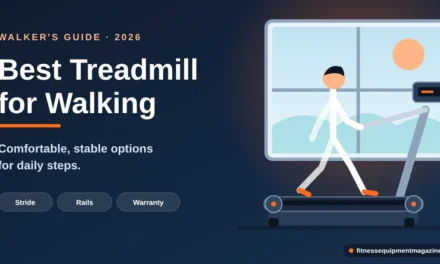
If walking is your main plan, don’t buy a runner’s belt just because it feels safer. A full-size running belt costs space, weight and usually money. Our guide to the best treadmill for walking explains which compact specs actually matter when the plan is steady, daily walking.
Jogging: the awkward middle
Jogging is where buyers misjudge their treadmill belt size most. Someone who says “I’ll just jog” might mean a 4 mph shuffle today and a 6.5 mph effort next spring. A 50-inch belt feels fine at the first pace and cramped at the second. If you’re even slightly ambitious, favor the upper half of the jogging band.
Running: is a 55 or 60 inch treadmill belt size right?
The most common debate in running treadmills is 55 against 60. Shorter runners with a conservative pace usually feel fine on 55. Taller users, or anyone with a stride that’s long for their height, often prefer 60. That is because it removes the feeling of trying not to hit the back or the front. If your measured running stride is above roughly six and a half feet, go to 60.
Tall runners and fast intervals
People over about six feet two often assume bigger is always better. For treadmill belt size, the tall are the exception: bigger mostly is better, since long legs produce long steps. Look at belts of 60 inches or more, and treat the extra width as a bonus. If you’re tall, long-striding and fast, a 22-inch-wide belt gives a more forgiving feel at speed, though it adds weight and cost.
A quick treadmill belt size lookup from your stride
Here’s a simple editorial rule of thumb for treadmill belt size. It’s not an industry standard, so treat it as a first filter. Start with your stride at the fastest speed you’ll regularly use.
If your stride lands near a boundary, round up when you will use the top speed often. And round down only if space is tight and your top speed is modest. Our treadmill buying guide shows how that choice fits with motor and incline specs.
Belt Width, Side Rails and Foot Placement
Length gets the attention, but width is where many buyers feel uneasy on day one. A belt that’s too narrow doesn’t feel dangerous until your foot drifts toward the edge, and then it feels very dangerous. Understanding what the width part of treadmill belt size really covers makes the choice calmer.
Treadmill belt size in width: how wide is wide enough?
Feet are narrower than people think. A typical running shoe is about four to five inches across, and most runners keep their feet nearly under their hips. So a 20-inch belt gives each foot something like four inches of side margin. That’s why 20 inches has become the comfort standard. A 16- or 18-inch belt works well for walking, where your stance stays narrow and predictable.
Width starts to matter more if you have a wide stance, wear bulky shoes, tend to drift sideways when you’re tired, or just feel nervous. For those users, 22 inches is a real quality-of-life upgrade. For everyone else, it’s pleasant but not essential, and it adds cost and weight.
Side rails and the dead zone
On either side of the belt sits a raised or flat platform, often called the side rail or side deck. Some machines make these platforms wide and flat so you can step on safely before starting. Others keep them narrow and slightly raised, which saves overall width but gives you less buffer if you drift.
That platform is useful for two things. It’s where you stand while the belt starts, and it’s the safe place to step to if something goes wrong. A narrow belt with generous side platforms is often easier to live with than a slightly wider belt flanked by tight, raised rails. When you compare listings, check the overall width as well as the belt width.
Foot placement habits to notice early
- Staying in the middle third. Most people settle here within a couple of sessions. That’s the ideal.
- Hugging the front. It usually means the belt feels too short, or you’re nervous about the rear. Slow down and re-center, and if it persists, that’s a clue about belt length.
- Drifting to one side. This can come from a slightly skewed belt, from a dominant leg, or from looking at a screen off to the side. Fixing the habit and checking belt alignment usually solves it.
- Gripping the rails. Lightly holding is fine for balance. Death-gripping tells you the speed, incline or belt feels like too much.
Safety
Clip the safety key to your clothing every time, and keep children and pets away from the machine while it’s running. The Consumer Product Safety Commission keeps a list of exercise-equipment recalls. And it’s worth checking the CPSC exercise equipment recall page before you buy and again if you’re using a used or older machine.
When a Longer Treadmill Belt Size Is the Wrong Call
It’s tempting to read everything above and conclude: get the longest belt you can afford. That’s often wrong. The belt’s length rides on top of the machine’s overall length. And the machine’s overall length rides on top of a safety zone behind it. A few extra inches of belt can turn into a much bigger loss of floor.
The footprint math behind any treadmill belt size
Take the overall length and add the rear clearance your manual asks for. Then add the front clearance if the console end faces a wall. Then compare the total to the room length minus furniture. Many makers ask for a few feet of free space behind the machine and a foot or two at each side. But the figure varies by model, so read the manual before you decide. That behind-the-machine zone isn’t decoration. It’s where you land if you stumble or the belt throws you back.
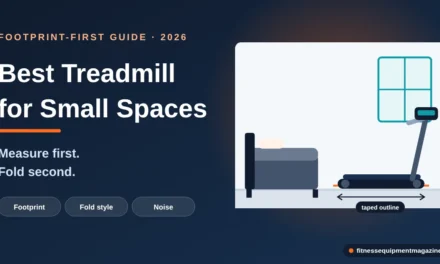
Two inches of overlap with a dresser might sound trivial. In real life, it means you either live with a reduced safety zone or move the dresser. And a machine that’s awkward to place tends to go unused. Our guide to the best treadmill for small spaces goes through room measurements in detail, including ceilings, doors and shared walls.
Folding changes storage, not treadmill belt size
Many compact machines fold the deck upright when you’re done. That reduces the storage footprint dramatically but does nothing for the running surface, and a longer belt makes a taller, heavier fold. If you need to tuck the machine into a closet or behind a door every day, check the folded height, the lift assistance and whether a longer belt makes the fold awkward. The folding treadmill guide covers the mechanics.
Don’t forget height
Treadmill belt size is a floor-plan problem, but ceilings matter too. A machine raises you by a few inches, and incline raises the front further. A tall runner on a long belt in a basement with low pipes can hit their head before they hit their goals. Measure the lowest point above the machine, not just the ceiling.
Buy the belt your stride needs. Then see whether the room can carry it, not the other way around.Editorial rule of thumb
Belt Thickness, Ply and Texture: What Else Sits Beside Treadmill Belt Size?
Length and width tell you how much belt you get. Thickness, ply count and surface texture tell you how that belt behaves. They aren’t part of the headline treadmill belt size, but they show up on many spec sheets. And they affect grip, noise and how long the belt lasts. Here’s what the terms usually mean.
What “ply” means
A ply is a layer of woven fabric inside the belt. Single-ply belts are common on light-duty and walking-oriented machines. Two-ply is the common middle choice. Three- and four-ply belts show up on machines built for heavier use, and sellers often highlight them. The idea is that more fabric layers add strength and dimensional stability.
The catch is that extra plies add stiffness and drag. A thicker belt takes more motor effort to turn. And it can be noisier or harder to keep aligned if the rollers and tension aren’t designed for it. So “4-ply” on a spec sheet is not a quality guarantee. It’s a clue about the intended duty level. And it should line up with the motor, the rollers and the warranty rather than stand alone.
Thickness: a few millimeters, with big opinions
Overall belt thickness is commonly somewhere in the range of a millimeter or two up to around three or four on heavy-duty designs. Manufacturers rarely list it, partly because it’s a hard number to compare. If a listing does state thickness, take it as one input about durability and feel. And compare it with how the maker describes the deck and cushioning. Our explainer on treadmill cushioning shows how much of that “feel” comes from the deck, not the belt.
Texture and grip
The top surface is usually patterned to give your shoe some traction. Diamond and grooved patterns are common, and there are smoother finishes on some designs. Most buyers will not notice the difference in daily use. What you will notice is a belt that’s glazed and shiny in the foot-strike zone after a year or two. That is because worn texture means less grip and a slightly different feel underfoot.
The underside matters too. Many belts are designed so the underside slides over the deck with a low-friction coating or a lubricant. Whether yours needs lubricating depends on the model. Follow the owner’s manual, because the wrong lubricant can damage the belt or deck, and the warranty may depend on it.
Don’t over-read ply counts
If two machines have the same treadmill belt size and one has a higher ply count, ask what else differs: motor duty rating, roller diameter, deck construction and the warranty on parts. The ply count is a reasonable tiebreaker and a poor deciding factor.
Deck Versus Belt Confusion in Listings: Seven Traps to Spot
Most confusion about treadmill belt size isn’t deliberate. Listings combine information from several suppliers, and the same word can mean different things on different pages. The patterns below show up often enough that it helps to recognize them quickly.
- “Deck size” with no definition. It may be the running surface, the board, or something else. Treat it as unknown until the seller clarifies.
- One length, no width. A listing that states only a length suggests the author is pulling from a quick summary. Ask for the full “width x length” in inches.
- Different numbers in different places. Title says 60 inches, specs say 55. Believe the more specific line, and then confirm by email or chat.
- Dimensions given in the box shipping data. Shipping sizes are packed sizes. They are bigger than the machine, and they say nothing about the belt.
- “Extra-long” with no number. Marketing words aren’t measurements. If a number isn’t there, there is no commitment.
- Folded dimensions mistaken for running room. The folded footprint is a storage figure. It’s usually much shorter than the belt.
- Belt length from a parts listing. Replacement belts are often described by the loop length, which can look like twice the running surface and confuse a quick comparison.
Decoding a made-up listing
Here’s an invented listing line, written in the style you’ll meet: “Deck: 20 x 60 in. Product dimensions: 78 x 36 x 57 in. Folded: 40 x 36 x 62 in.” Read it as follows. The 20 by 60 is probably the running surface, since the overall length is 78, a plausible 18 inches beyond that. The 36 inches is the overall width. The folded numbers are about storage. Nothing is wrong with this listing, but it needs three small interpretations that a rushed shopper might get wrong.
Now imagine a different line: “Belt: 62 x 20 in. Overall: 66 x 30 in.” Here the gap between belt and overall length is only 4 inches, which isn’t plausible on a motorized treadmill with a hood. Either the belt number is really a deck or loop figure, or the overall length is understated. This is where a polite question to the seller pays off.
Four questions that settle it
- “What is the usable running surface, in inches, width by length?”This one question settles treadmill belt size, and it forces a direct number.
- “What is the overall length in use, with the console and rear frame?”That’s the footprint number for your floor plan.
- “How much clearance does the manual require behind and beside the machine?”Ask for the manual page if they can send it.
- “What is the folded height and length, if it folds?”Useful for closets, car trunks and tight corners.
A good seller replies with numbers. A vague or evasive reply is information too. It doesn’t prove a problem, but it’s a reason to compare other sellers before you commit. For a broader checklist of what to verify on a listing, the treadmill buying guide covers specs beyond belt size.
Four Hypothetical Shoppers, Four Answers
Abstract ranges are fine, but people shop as individuals. The four profiles below are invented for illustration. They’re not case studies of real buyers, and the numbers are typical rather than measured. Still, they show how the same logic gives each person a different treadmill belt size.
The apartment walker who works from home
She is 5 foot 4, plans to walk at 2 to 3 mph during calls. And has a spare corner about 7 feet long. Her measured walking stride is around 4.4 feet. A compact folding treadmill with a treadmill belt size near 18 by 50 fits her stride and her room. A 60-inch running belt would take her entire corner for no benefit. If the desk is the plan, she might also look at the under-desk treadmill guide, where belts are shorter and the speed ceiling lower.
The tall garage runner
He’s 6 foot 3, runs 5 days a week, and uses a garage with a 14-foot clear run. His long stride, about 7 feet at his easy pace, lands him in the “60 inches or more” band. A 22-inch belt is a comfort upgrade. Because his space is generous, he can simply follow the treadmill belt size his stride demands. And the main compromise is the machine’s weight and delivery logistics.
The couple who share one machine
One partner is 5 foot 2 and mostly walks. The other is 6 foot 0 and jogs. They should choose the treadmill belt size for the taller, faster person. That is because a longer belt doesn’t hurt a shorter user, while a shorter belt does hurt a taller one. The remaining question is whether the shorter partner is comfortable with the extra width and the longer frame in their room.
The older adult who wants steadiness
He’s in his early seventies, walks daily outdoors, and wants an indoor option for bad weather. He doesn’t need speed, so a long belt isn’t the priority. What matters more is generous width, sturdy handrails, wide and flat side platforms, and a low starting speed. Our guide to a treadmill for seniors covers those features in depth. Anyone with balance or health concerns should check with a clinician before starting a new routine. The HHS Physical Activity Guidelines are a sensible general reference for how much movement adults are encouraged to aim for.
A Double-Check Workflow for Treadmill Belt Size Before You Buy
You can know everything above and still buy the wrong machine if the steps happen out of order. People measure the room last, ask the seller never, and read the manual after the box has arrived. The workflow below puts the cheap checks first, so the expensive ones only happen for a machine that has already passed.
The short version as a checklist
- I have written down my walking, jogging and running strides. And I know which one drives the decision.
- I know the band that matches my longest regular stride and my realistic top speed.
- I have confirmed the running surface (not “deck”) in width by length, in inches.
- I have the overall length, width and height, plus the clearance the manual requires.
- I measured the doors, stairs and turns the delivery has to pass.
- I read the warranty and the return policy, including who pays the return freight.
- I checked the CPSC list for the maker or similar designs.
- I have a plan to test the machine at my real speed in the first days.
What to do the day it arrives
Assembly comes first, and so does a level floor. Then run the belt empty and watch it for a minute: it should track near the center without drifting. Step on at a walk and move up to the fastest speed you’ll realistically use, even if only for a minute. Notice where your feet land, whether you ever feel crowded at the rear, and whether your hands reach for the rails. If the machine feels wrong at your real pace, tell the seller within the return window, not three months later.
Before the first run
Read the manual’s setup and safety pages, attach the safety key, and keep the area behind the machine clear. The CPSC publishes recall notices at its exercise equipment page, and it’s worth bookmarking if you buy used or older machines.
If you want a wider framework for deciding between machine types, the guide to the best budget treadmills shows how belt size trades off against frame, motor and warranty when money is limited.
Belt Wear and Replacement: Matching Treadmill Belt Size
Every belt wears out eventually. A belt that’s well matched to its machine and kept clean and properly adjusted can last a long time. But how long depends on use, weight, body, maintenance and build. Rather than guess at a lifespan, watch for signs, and know what to measure if you ever need a replacement.
Signs a belt is wearing
- Fraying or curling edges. Often caused by the belt rubbing against a side rail or frame. Treat it as a tracking problem first.
- A shiny, smooth patch in the foot-strike zone. The texture has worn, and grip is lower than it was.
- Slipping or hesitation when you step. This might be belt tension, motor behavior or deck friction. It’s worth diagnosing carefully rather than assuming it’s the belt.
- A ridge or cracks along the center. Visible damage to the top layer means the belt is nearing the end of its life.
- Persistent drifting to one side. This can be adjusted, but repeated drifting often points to uneven wear or a frame issue.
What to measure when you need a replacement
Here’s where the confusion over treadmill belt size returns. A replacement belt is described by its loop length (the full circumference around the rollers) and its width, not by the running surface. A machine with a 55-inch running surface commonly needs a belt loop in the range of roughly 120 to 130 inches, though designs vary. So don’t search for “55 inch belt” and expect a match.
- Find the model numberIt’s on a label on the frame, often near the power cord or under the hood. Many parts suppliers list belts by model.
- Check the manual or parts diagramThe manufacturer’s parts list should include the belt part number and its size.
- Measure the old belt, if you can remove itMeasure the width edge to edge. For length, run a flexible tape once around the whole loop along the edge. Laid flat, the belt is two layers, so doubling the flat length is another way to get there.
- Note the ply and constructionIf your old belt is a 2-ply, don’t swap in a 4-ply without checking compatibility, because stiffness and tension requirements change.
- Ask about tension and lubricationA new belt may need re-tensioning and a different lubricant than the old one. The supplier or the manual should say so.
Replace the belt, or replace the machine?
Belts are often one of the more affordable replacement parts relative to a machine. But labor, shipping and the condition of the deck and rollers all change the math. A worn belt on a deck that’s also worn may be a poor investment, since a fresh belt on a rough deck wears quickly and runs hot. Compare the quote to the age of the machine, its warranty status and what else is showing wear.
For belts of any age, the best investment is routine care: keep the machine free of dust, wipe the belt and rails. And follow the manual on lubrication and tension checks. If you find yourself adjusting the belt every week, that’s a sign for a deeper look, not a more frequent turn of the wrench.
Treadmill Belt Size FAQ
What is the best treadmill belt size for running?
For most home runners, a belt around 20 inches wide and 55 to 60 inches long is the practical sweet spot. Shorter runners with a conservative pace do well at 55. Taller users, long-stride runners and anyone doing fast intervals usually prefer 60 or more. The most accurate treadmill belt size for you comes from measuring your own stride at your fastest regular pace.
What is a good treadmill belt size for walking?
Walkers can usually be comfortable on a belt about 16 to 20 inches wide and 46 to 55 inches long. Walking pads and very compact folders are smaller and suit users with a shorter, steadier stride. If your measured walking step is longer than average, or you sometimes walk briskly, favor the 50 to 55 inch end instead of the minimum.
Is the deck the same as the belt?
Not exactly. The belt is the moving loop you stand on, and the deck is the board beneath it. Some sellers use “deck size” casually to mean the running surface, which is where confusion starts. If a listing only says “deck,” ask the seller for the usable running surface in width by length. So you aren’t comparing different measurements.
How do I measure the treadmill belt size on a machine I already own?
Measure the visible, moving top surface from where it emerges at the front roller to where it disappears at the rear, then measure across the belt edge to edge. That gives you the running surface. For replacing the belt, you’ll need the loop length instead, which comes from the manual, the model number or the old belt laid flat.
Is a 20 x 55 treadmill belt size big enough for a tall person?
It can be, but many people over about six feet tall, or with a long running stride, prefer a 60-inch belt. If you’re tall and plan to jog or run, measure your stride and compare. If you only walk, 55 inches is usually plenty. When you’re torn, choose the longer belt only if your room can hold the longer frame and rear clearance.
Does a wider belt matter?
For walking, 16 to 18 inches is typically fine. For jogging and running, around 20 inches is the common comfort standard. And 22 inches is a bonus for wide-stance or nervous users. Width matters less than people expect once your steps are centered. But it adds real comfort if you tend to drift or feel crowded near the edges.
Can I swap in a different treadmill belt size when replacing a belt?
Generally no. A replacement should match the original’s loop length, width and, ideally, ply and construction. A belt that’s too short can’t be tensioned correctly, and one that’s too long may slip or track badly. Check the model number and the manufacturer’s parts list before ordering.
How much space do I need around a treadmill?
Plan on the machine’s overall length and width, plus the clearance in the manual. Many makers ask for several feet behind and a foot or two on each side, but requirements vary. Don’t forget ceiling height, especially with an incline. A longer treadmill belt size makes the whole footprint longer, so measure before you decide.
Choosing Your Treadmill Belt Size: Next Steps
Here’s the whole article in four moves. Measure your stride at the speed you’ll truly use. Translate it into a band, and round up if your top speed is high. Test the machine’s overall length, plus rear clearance, against the room you have. Then get the seller to confirm the running surface in plain numbers. That’s all there is to getting treadmill belt size right.
If you’re still comparing whole machines, our detailed treadmill buying guide puts belt size next to motor, incline, cushioning and warranty. And the overview of the best treadmills for home use helps you match the machine type to your life. Belt size is one decision among several. And it’s one of the few you can settle with a tape measure on a quiet afternoon.
Sources and further reading
- U.S. Consumer Product Safety Commission: exercise equipment recalls — check the maker and model before you buy new or used.
- HHS Physical Activity Guidelines for Americans — general federal guidance on adult physical activity.
- Manufacturer owner’s manuals and spec sheets — the final authority on belt dimensions, clearance, lubrication and tension for your machine.
Last reviewed: October 2026. Specifications, prices, warranties and recalls change, so confirm every figure against the manufacturer’s current spec sheet and the CPSC list before buying. This article is general, research-based guidance and not medical advice. Some links on this site may be affiliate links; if you buy through them we may earn a commission at no extra cost to you. But recommendations are based on the criteria in the article, not payout. We haven’t hands-tested any product mentioned in this guide.